Trump Receives Four Iran Demands from Netanyahu
Israeli Prime Minister Benjamin Netanyahu has emphasized the importance of four key demands that he conveyed to U.S. President Donald Trump during their recent meeting, aiming to prevent potential military strikes against Iran. These demands include ensuring that all enriched uranium leaves Iran, eliminating its future enrichment capabilities, enforcing restrictions on the range of Iranian ballistic missiles, and dismantling Iranian proxy militias in the region, which Netanyahu refers to as an "axis of terror." Despite these requests, Netanyahu expressed skepticism about the possibility of reaching a viable agreement with Iran.
The ongoing negotiations between the U.S. and Iran are seen as a critical moment for the Middle East, with the potential to either lead to a devastating regional conflict or usher in a new era free from Iranian aggression and instability. This situation also serves as a significant test of Trump's diplomatic strategy, which emphasizes peace through strength.
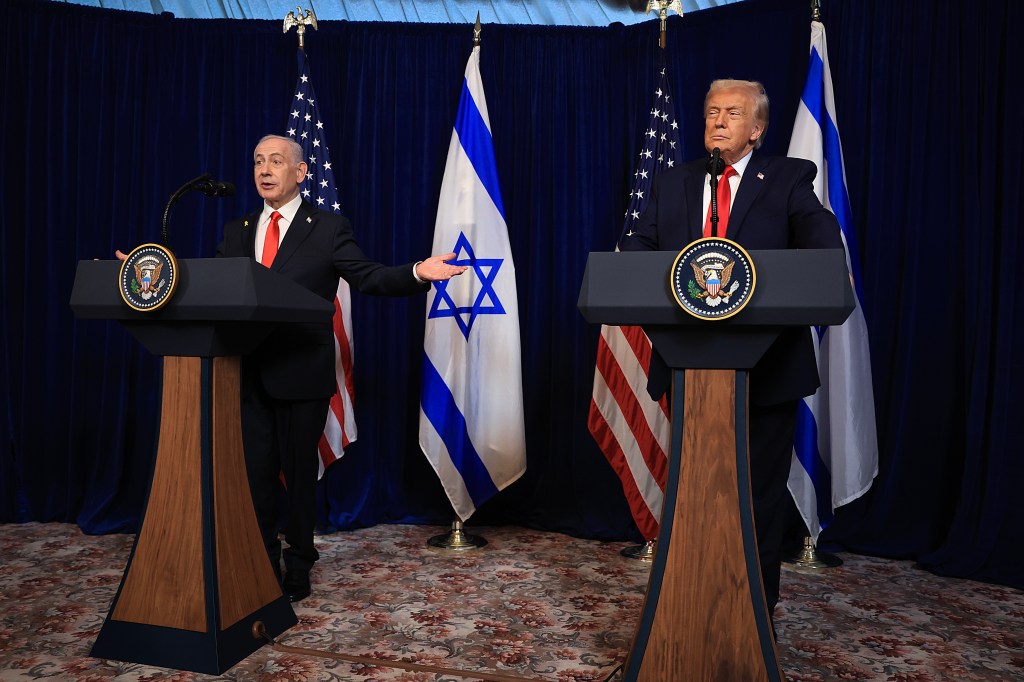
At a conference of presidents of major American Jewish organizations, Netanyahu voiced his doubts about any deal with Iran, stating that he believes Iran is reliable only in its tendency to lie and cheat. However, he emphasized that if a deal is reached, it must include components that ensure the security of Israel, the United States, and the broader region.
Iran continues to deny allegations that it seeks to develop a nuclear weapon, asserting that its nuclear program is solely for civilian energy purposes. Nevertheless, Iran possesses uranium enriched to a level beyond what is necessary for energy use. The country has also set a red line regarding its ability to enrich uranium as talks with U.S. officials continue.
Iranian Foreign Minister Abbas Araghchi is currently in Geneva engaging in deep technical discussions with the head of the International Atomic Energy Agency (IAEA) ahead of his upcoming talks with U.S. officials. Araghchi stated that he is working towards a fair and equitable deal and clarified that submission to threats is not an option.

Trump remains open to a deal with Iran but has warned of severe consequences if one cannot be reached. To prepare for potential military action, Trump has deployed a second warship to the Middle East as part of a larger military buildup in the region. This includes the movement of the USS Abraham Lincoln carrier strike group into the Middle East in late January, followed by the redeployment of the USS Gerald R. Ford from the Caribbean.
In addition to the carrier deployment, there has been an increase in military assets such as fighter jets, refueling tankers, drones, and missile-defense systems stationed at American bases in the Middle East. These preparations are intended to support potential military action against Iran and to protect regional allies and U.S. assets from Iranian retaliation.

Initially, Trump threatened to strike Iran in support of protesters who faced a brutal crackdown by the regime’s security forces, resulting in thousands of deaths. The unrest was fueled by economic hardship and dissatisfaction with the ruling elite. However, Trump has since shifted his focus to seeking a broader deal with Iran, using the threat of military action to compel Tehran to negotiate on issues such as its nuclear program, missile capabilities, and funding of militant proxies like Hezbollah and the Houthis.
During a visit to Fort Bragg in North Carolina, Trump expressed his belief that a change in power in Iran would be the best outcome. This sentiment highlights the complex nature of U.S.-Iran relations and the high stakes involved in the ongoing negotiations.
Related Articles
- China's Nuclear Acceleration Revealed in Satellite Images: Report
- This Iraq Presidential Candidate Has a Plan to Help Trump Challenge Iran
- AOC Warns US Retreat From Global Alliances Risks ‘Age of Authoritarians’
- Start your unlimited trial


