SAIC's India Expansion: $440M for Hybrids and EVs
Strategic Expansion and Focus on New Energy Vehicles
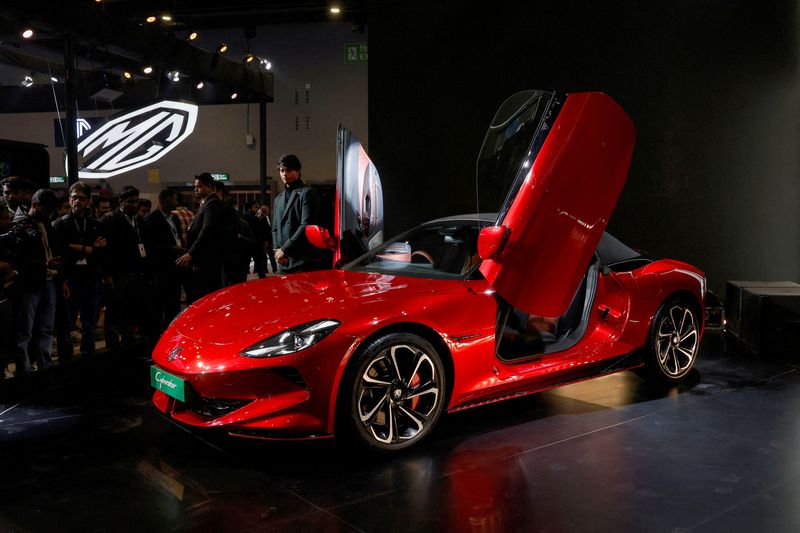
JSW MG Motor, a joint venture between China's SAIC Motor and India's steel-to-cement JSW Group, has announced plans to invest up to $440 million in expanding its Indian factory and launching new vehicles with a strong emphasis on hybrid and electric models. This move comes as the company's managing director, Anurag Mehrotra, outlines a strategy to boost growth and profitability.
Despite the challenges faced by the carmaker, which has struggled to gain traction in the Indian market since 2020 when New Delhi imposed restrictions on investments from Beijing, the company is now looking to the future. The recent sale of a minority stake in its India unit to JSW in 2024 was aimed at raising capital, but even with rising sales, the company has yet to achieve profitability.
Mehrotra revealed that the company will allocate between 30 billion to 40 billion rupees ($330 million to $440 million) over the next few years to launch three to four new vehicles this year and increase its plant capacity to 300,000 units annually from the current 120,000 units. He emphasized that the funding would come from multiple sources, including internal accruals for this year, with options like debt and equity also under consideration.
Impact of India-China Relations on Growth
India, the world's third-largest car market, is becoming an attractive destination for automakers, with Japanese companies like Toyota and Suzuki investing billions of dollars, and European firms such as Renault making a return. However, Chinese players have largely been excluded due to investment restrictions.
While SAIC and BYD do sell cars in India, their growth has been limited. In 2024, SAIC was in discussions to reduce its 49% stake in the India venture, with JSW offering to buy most of SAIC's stake. However, disagreements over valuation prevented the deal from moving forward.
Despite the challenges, Mehrotra noted that there has been some improvement in relations between New Delhi and Beijing. He pointed to increased receptivity in areas such as visas and flights, although he acknowledged that risks still remain.
Betting on New Energy Vehicles to Drive Sales
JSW MG Motor reported losses that doubled to $121 million in the financial year ending March 31, 2025. At that time, the company had approximately $60 million in cash and borrowings of $344 million, according to government filings.
Despite these financial challenges, the company has seen an increase in sales. In the 2025 calendar year, it sold 70,500 cars, compared to 61,000 units in 2024, largely driven by its Windsor electric vehicle.
Mehrotra outlined a new strategy focused on balancing volumes and market share with profitability, leveraging a portfolio of hybrid and electric cars, which the company defines as new energy vehicles (NEVs). He stated that NEVs would make up at least 75% of the company's total offerings.
Looking ahead, Mehrotra expects NEVs to account for 30% of India's total annual sales of up to 6 million vehicles by 2030, up from about 5% of the country's 4 million annual sales currently.
Cost Reduction Through Local Sourcing
To improve profitability, the company plans to reduce costs by sourcing more components locally rather than importing them. Mehrotra highlighted that deeper localization of car components could be a significant factor in achieving profitability.
"Doing deeper localisation on the cars will be one of our biggest unlocks for profitability. It reduces foreign exchange exposure and dependence on sea freight," he added.
This strategic shift aims to position JSW MG Motor as a competitive player in India's evolving automotive landscape, while navigating the complexities of international relations and economic constraints.


