Warning of Job Losses as Costs Push 'Zombie' Firms to Close
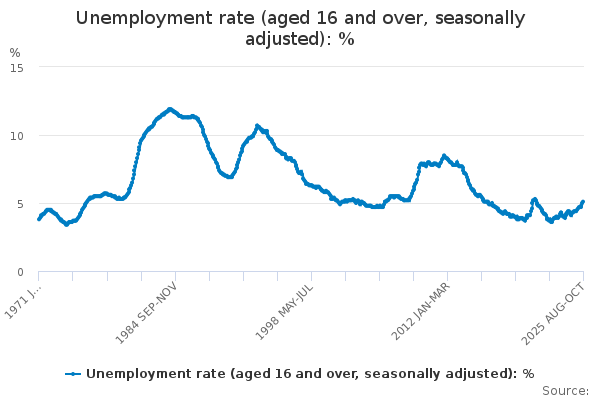
The UK has seen a significant rise in unemployment, with the latest figures revealing that joblessness is at its highest level since the onset of the pandemic. According to data from the Office for National Statistics (ONS), the unemployment rate reached 5.1 per cent in the three months leading up to October, a marked increase from 4.3 per cent a year earlier. This upward trend highlights the growing challenges faced by workers across the country.
Experts have warned that this situation could worsen significantly by 2026, as businesses continue to grapple with intense cost pressures. A combination of factors, including years of high interest rates, rising employment costs, and soaring energy bills, has created a difficult environment for companies. Inflation has also driven up the costs of raw materials and services, making it increasingly challenging for businesses to remain profitable.
One expert has suggested that these conditions may lead to the closure of so-called "zombie companies." These are businesses that have been struggling to survive, unable to grow or adapt but still managing to stay afloat due to minimal revenue. The potential closure of such firms could have both negative and positive implications. While the loss of jobs is a concern, the exit of underperforming companies may create space for newer, more innovative businesses to emerge. Over time, this shift could lead to improved productivity and better economic conditions.
Ruth Curtice, chief executive of the Resolution Foundation, noted that there are early signs of a "zombie apocalypse," where higher interest rates and minimum wages have contributed to the demise of struggling firms. She added that while this development could be beneficial for the medium-term economy, the short-term consequences might include job displacement and higher unemployment. Policymakers, she said, must take action to address these challenges.
A recent report by The Times indicated that two-thirds of economists surveyed believe unemployment will fall between 5 and 5.5 per cent by the end of 2026. If the upper limit of this range is reached, it would mark the highest level of unemployment since 2015, when the rate was 5.6 per cent. This figure was part of a broader decline from a peak of 8.4 per cent in 2011.
Many businesses paused or cancelled recruitment plans during the latter part of 2025, influenced by uncertainty surrounding Rachel Reeves’ Budget and the financial implications of hiring new staff. Earlier in the year, increases in National Insurance contributions and the minimum wage further added to the challenges faced by employers.
In addition to overall job levels, several factors suggest that young people are likely to be disproportionately affected when it comes to finding work. Data from the ONS showed that the number of unemployed individuals aged 18 to 24 increased by 85,000 over the three months to October, marking the largest rise in three years.
The government's plan to introduce a single cost of employment for all adults, rather than maintaining the current two-tier system where 18 to 20-year-olds are paid a lower minimum wage, has raised concerns among business leaders. They predict that companies may stop hiring inexperienced younger workers, as it will no longer be cheaper to employ them compared to experienced workers.