Magyar Launches Anti-Orban Election Drive
The Tisza Party's Vision for Hungary
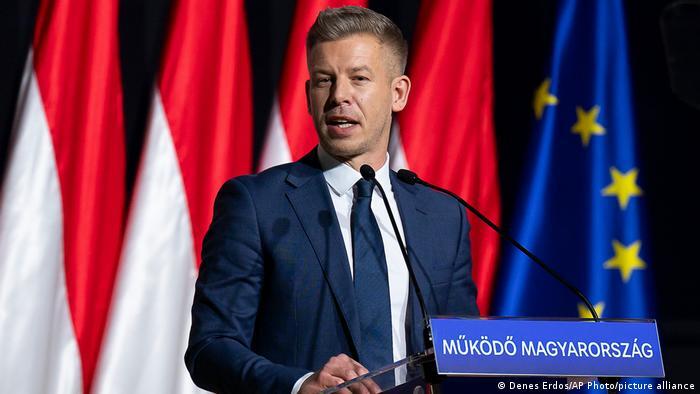
Peter Magyar, the leader of the opposition Tisza party, has launched an ambitious campaign to challenge Prime Minister Viktor Orban's 16-year rule. His party is focused on combating corruption in one of the European Union's poorest countries and reversing Budapest's growing alignment with Russia. During a campaign event in Budapest, Magyar vowed to end Orban's leadership, tackle corruption, and reorient Hungary back towards Western Europe.
Magyar, a former influential member of Orban's nationalist Fidesz party, took over the center-right Tisza party in 2024. Since then, he has emerged as a significant threat to Orban's dominance. In June 2024, the Tisza party secured approximately 30% of the vote in the European Parliament elections, and most independent polls suggest it holds a substantial lead ahead of the upcoming election on April 12.
"We're standing on the threshold of victory with 56 days left to go," Magyar declared to his supporters. "Tisza stands ready to govern."
Who is Peter Magyar?
At 44 years old, Magyar is a former lawyer who has criticized Orban's right-wing populist government for mismanaging Hungary's economy and social services. He has also accused the government of allowing rampant corruption, which has left Hungary among the EU's poorest nations.
"Not only has the Hungarian economy not taken off; it has hit a dead end," Magyar stated. He has also condemned Orban's antagonism towards the EU and his continued proximity to Russian President Vladimir Putin, despite Russia's ongoing invasion of Ukraine.
After meeting with several European leaders at the Munich Security Conference, Magyar emphasized that Hungary's future lies within Europe. "Hungary's place is in Europe," he said. "Not only because Hungary needs Europe, but also because Europe needs Hungary."
However, Magyar has also made it clear that a Tisza government would maintain its stance against accelerated Ukrainian accession to the EU and retain the border fence built by Orban in 2015 as part of anti-immigration policies.
Combating Corruption and Strengthening Democracy
Despite some skepticism towards the EU, Magyar has pledged to combat corruption and strengthen Hungary's democratic institutions and independent judiciary. This effort aims to regain access to billions of euros in suspended EU funding.
"It is time to call corruption what it is: theft," Magyar said, promising "total transparency in contracts involving public funds" and the "recovery" of all the money Hungary "has been deprived of over 16 years."
During the campaign, Magyar has targeted Orban's traditional strongholds—small, conservative-leaning towns and villages across the country. His focus has been on addressing issues such as low wages and rising living costs.
He has also challenged Orban to a televised debate, which has so far gone unanswered. Magyar accused Orban of being incapable of engaging in meaningful dialogue, instead resorting to "agitation" and "threats." He claimed that Orban's government has even engaged in spying on opponents.
"If they can search through my private life, then they can rummage through everyone's," Magyar said.
Orban's Continued Grip on Power
Opposition and rights groups have consistently accused Orban of suppressing critical voices in the judiciary, academia, and media, as well as undermining minority rights. Recently, local authorities in Budapest allowed the staging of the annual neo-Nazi "Day of Honor" gathering while cracking down on small anti-fascist counter-demonstrations.
The ruling Fidesz party has not released an official election manifesto, arguing that voters are already familiar with its policies after 16 years in power. Orban, during a recent speech, vowed to continue his crackdown on what he described as "pseudo-civil organizations, bought journalists, judges, politicians," claiming his work was only "half done."


