Maduro Detained in New York as Trump Vows US Will 'Run' Venezuela
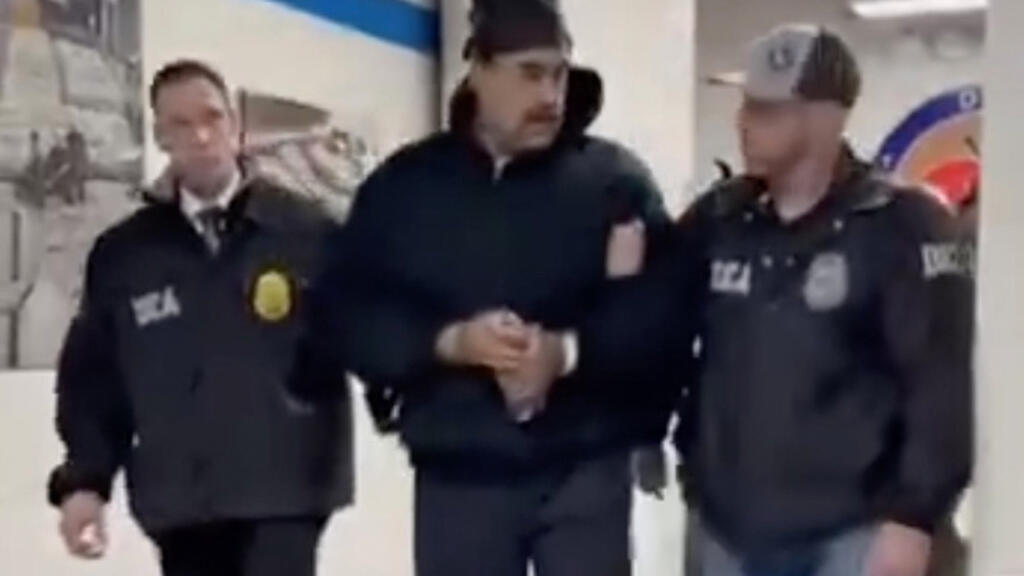
The Capture of Nicolas Maduro
Nicolas Maduro, the former president of Venezuela, is currently being held at the Metropolitan Detention Center in Brooklyn. He was transferred there following his indictment in New York on charges related to drugs and weapons, which he has categorically denied. This development marks a significant shift in the political landscape of Venezuela, as the former leader is now under the jurisdiction of US authorities.
The capture occurred after a pre-dawn operation involving American special forces, who seized Maduro and his wife from their country. This move came shortly after President Donald Trump announced that the US would take effective control of Venezuela. The operation involved commandos who grabbed Maduro and his wife while air strikes targeted locations in and around Caracas.
A US government plane transported Maduro to a military base, where he was then taken by helicopter to New York City. There, he and his wife were set to face arraignment on charges of drug trafficking and weapons possession. The White House shared a video on X showing Maduro, handcuffed and wearing sandals, being escorted by federal agents through a Drug Enforcement Administration facility in New York. In the footage, the 63-year-old leftist leader can be heard saying, "Good night, happy new year," in English.
Despite the success of this high-risk raid, the future remains uncertain. Trump indicated that he would be designating individuals from his cabinet to manage affairs in Venezuela, though he provided no further details. He also hinted at the possibility of deploying US troops, stating that Washington was not afraid of having boots on the ground. However, he seemed to rule out the idea of the opposition taking power, suggesting instead that he could work with Maduro's vice president, Delcy Rodriguez.
Oil Reserves and Political Implications
One clear aspect of Trump's strategy is his interest in Venezuela's substantial oil reserves. He stated that large US oil companies would invest billions to fix the country's deteriorated infrastructure and sell significant amounts of oil. This focus on economic interests highlights the strategic importance of Venezuela's resources.
Trump's stance on the opposition leader, Maria Corina Machado, was notably cold. Despite her recent Nobel Peace Prize win, he dismissed her potential role in leading Venezuela, claiming she lacks support and respect within the country. Instead, he praised Rodriguez, suggesting she might be willing to collaborate with the US to restore Venezuela. However, Rodriguez quickly rejected this notion, demanding Maduro's release and vowing to defend the country.
Late Saturday, Venezuela's Supreme Court ordered Rodriguez to assume presidential powers in an acting capacity. This development underscores the confusion surrounding the situation. Trump indicated that US involvement may be long-term, stating, "We're going to stay until such time as the proper transition can take place."
International Reactions
Venezuela's ally, China, strongly condemned the US operation, while France warned that solutions cannot be imposed from outside. United Nations Secretary-General Antonio Guterres expressed deep concern over the violation of international law. At Venezuela's request, the UN Security Council will meet on Monday to discuss the crisis.
Blackout and Bombing
Venezuelans had been anticipating attacks as US forces accumulated off the coast for months. The early morning operations included explosions and the sound of military helicopters around 2:00 am (0600 GMT). Air strikes targeted a major military base and an airbase, among other sites, for nearly an hour.
Shifting Justifications
The US and several European governments have never recognized Maduro's legitimacy, citing allegations of election theft in 2018 and 2024. Maduro, who has been in power since 2013 after succeeding his mentor, Hugo Chavez, long accused Trump of seeking regime change to gain control of Venezuela's oil reserves.
Trump has provided various justifications for his aggressive approach toward Venezuela, including illegal migration, narcotics trafficking, and oil. However, he had previously avoided openly calling for regime change. Several members of Congress questioned the legality of the operation, but Trump's key ally, Mike Johnson, stated it was "justified."


