AI Over Starmer? Burnham's Challenge
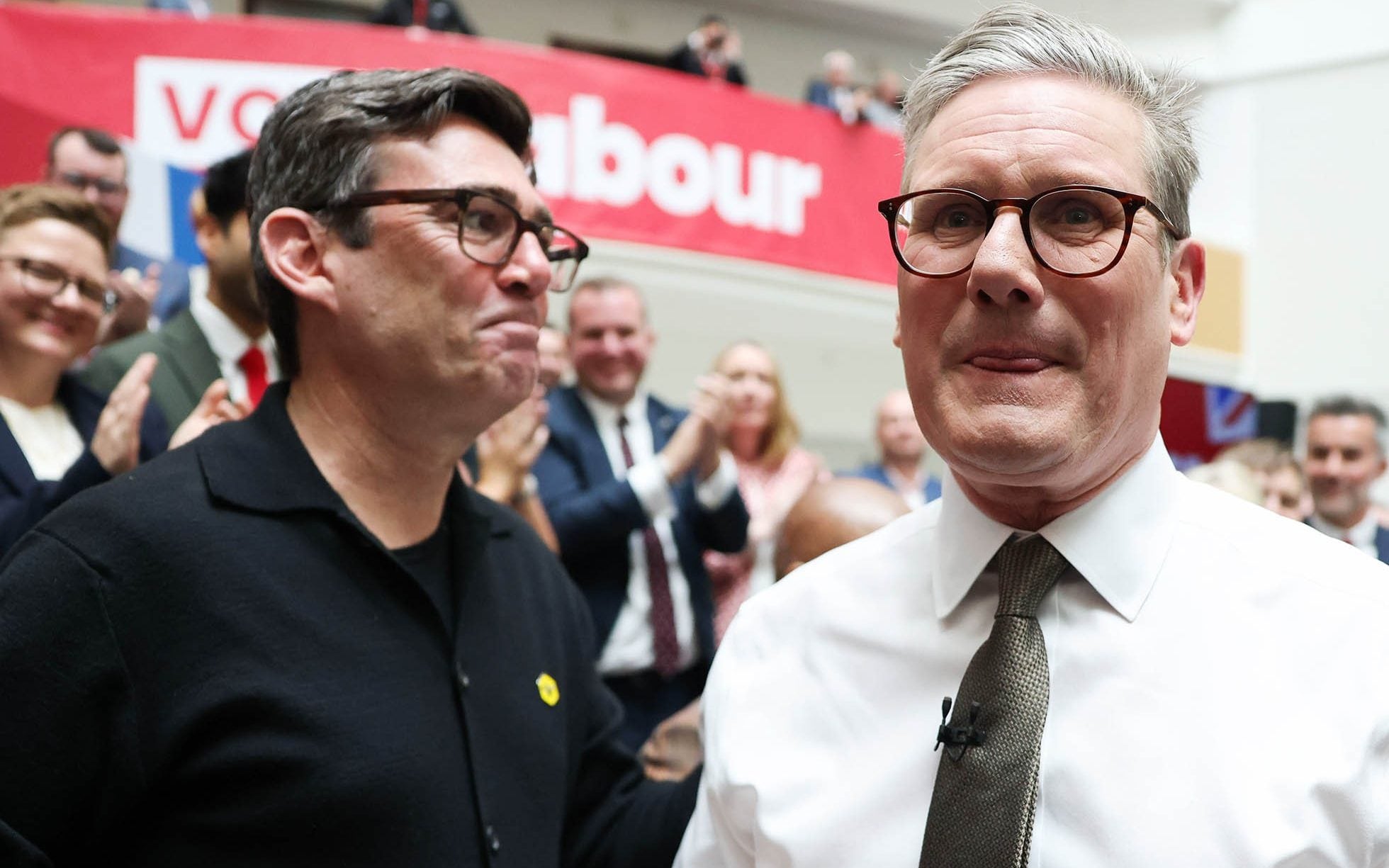
Public Opinion on Andy Burnham and Keir Starmer
The debate over who would make a better prime minister between Andy Burnham and Sir Keir Starmer has sparked significant discussion among the public. While a survey by Savanta suggested that many voters believe Burnham, the Mayor of Greater Manchester, could perform better than the current Prime Minister on key issues such as taxation, immigration, and crime, the views of Telegraph readers tell a different story.
A poll of nearly 31,000 readers revealed that only 22% believed Burnham would be a better leader than Starmer. A majority of respondents (47%) felt Burnham was not a suitable replacement for the Prime Minister, while 31% were unsure about their preference between the two.
Criticisms of Burnham's Leadership
Burnham, who is reportedly seeking to return to Parliament, has been positioned as a potential challenger to Starmer as the latter’s approval ratings decline. However, many readers questioned his qualifications based on his past roles. John Ball, 77, from Southend-on-Sea, criticized Burnham’s time as a minister, particularly his tenure at the Department of Health, which he described as “awful.”
Chris Steele echoed these concerns, noting that Burnham’s history with the governments of Tony Blair and Gordon Brown, along with his left-leaning positions, raised doubts about his suitability for leadership. Steele added that while Burnham may have strong support in Manchester, managing a city region is not equivalent to leading a nation.
Scarlet Pimpernel argued that Burnham’s policies would not bring significant change. She pointed to his efforts to build houses in green spaces, failed attempts at introducing congestion charges in Manchester, and his handling of the grooming gangs scandal as evidence that Burnham would offer “just more of the same” if he became Prime Minister.
Supporters of Burnham's Leadership
Despite the criticisms, some readers acknowledged Burnham’s leadership qualities. Richard Chamberlain highlighted his cooperation with Andy Street, the former Conservative Mayor of the West Midlands, suggesting that Burnham is a pragmatic Social Democrat capable of working with colleagues across the political spectrum.
However, Burnham’s left-wing manifesto and his openness to alliances with figures like Jeremy Corbyn and Zack Polanski raised concerns, particularly regarding economic policy. Richard Sales expressed doubt about Burnham’s understanding of financial markets, citing his comments on government borrowing as a sign of inexperience.
Albert Green shared similar concerns, arguing that while Burnham might provide a temporary boost in Labour’s polls, he lacks solutions to the country’s economic challenges. David Webb also worried about Burnham’s stance on financial markets, suggesting that reducing public expenditure would be necessary to end market dependency, something he believes Burnham is unlikely to pursue.
Lack of Viable Alternatives
The discussions among Telegraph readers highlighted a broader concern: the lack of viable alternatives to Starmer. Mike Machin admitted that he could not think of a single politician in the current parliament who would make a good Prime Minister. He hoped that someone, from any party, would rise to the occasion in the next three years.
Roger Feraille, a retired software engineer, offered a more extreme view, stating that the Labour Party’s front bench had no talent for leadership. He suggested that the country would be better off with AI taking over the role of Prime Minister.
Calls for a General Election
Several readers argued that the Government’s poor popularity justified an immediate general election. Lewis MacLennan stated that while Starmer needed to be replaced, Burnham would be an even worse choice. He called for a general election but noted that Labour was unlikely to give up power prematurely.
In conclusion, the debate over Burnham and Starmer reflects a deep-seated frustration with the current political landscape. While some see potential in Burnham’s leadership, others remain unconvinced, and many feel there are no clear alternatives to the current situation. The discussion underscores the need for meaningful change and stronger leadership in the UK.


